From calm to chaotic, apathy to fervour, my compositions emerge from the power of emotions—be they lived, envisioned, or simply perceived in those around me.
Explore my portfolio and breathe life into your next project or listening experience.
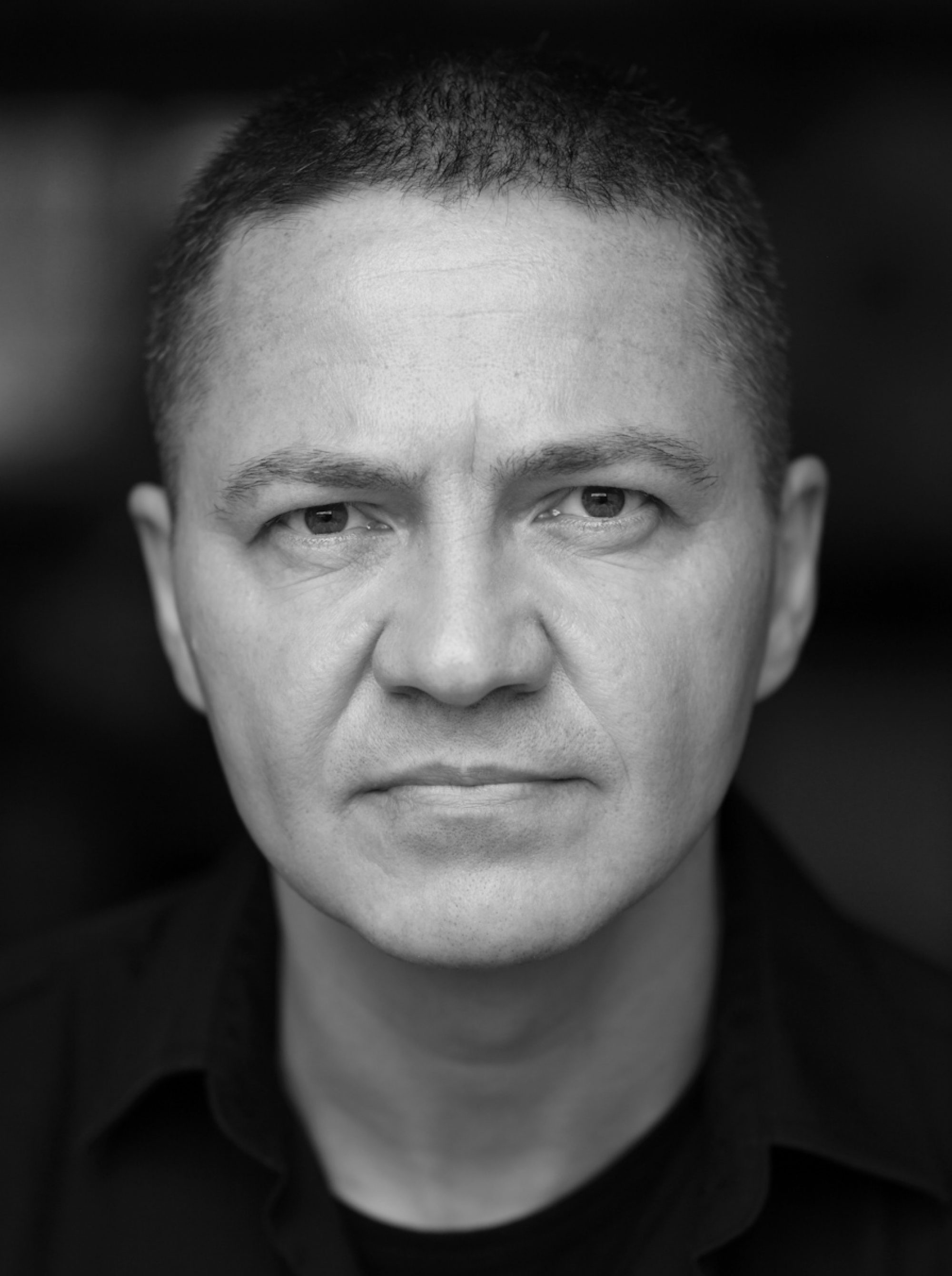
Composer
From calm to chaotic, apathy to fervour, my compositions emerge from the power of emotions—be they lived, envisioned, or simply perceived in those around me.
Explore my portfolio and breathe life into your next project or listening experience.
Martin Evans is a Welsh composer and pianist. He studied at the Royal College of Music in London which served as a launching pad for his successful early career as a session musician and arranger. During that period, he collaborated with several European pop-rock bands and solo artists including Swiss singer Stephan Eicher, Italian singer-songwriter Gianna Nannini, the German folk-rock band Poems for Laila, and the British indie duo Shelleyan Orphan, touring extensively throughout Europe, Canada and the United States.
In recent years, his passion for composition, fuelled by the power of emotions, has led to the creation of works which span a wide range of genres from choral and instrumental to chamber and orchestral music, some including fixed media electronics.
His choral works have garnered particular attention since being a finalist in the BBC Radio 3 Carol Competition in 2017, resulting in a recording by the BBC Singers and broadcast on Radio 3. He was a finalist in the Charles Wood Composition Competition (2024), shortlisted in the Sir David Willcocks Carol Composer Competition (2023) and twice recognised in the Japan International Choral Composition Competition (2022 and 2024). In December 2025, he won the inaugural Aurora Choir Carol Composition Competition 2025 with his setting of Christina Rossetti’s well-known poem, Love Came Down at Christmas, premiered by the choir on 20 December 2025 at St Andrew’s Church, Southgate, London, N14 5PP.
A passionate supporter for the accessibility of live music and performance art to everyone, Martin recently curated and performed in a free lunchtime recital, supported using public funding by the National Lottery through Arts Council England. Titled ‘Calm Amidst the Chaos’, the event showcased a selection of his introspective solo piano and chamber works incorporating bass flute, bass clarinet, and fixed media electronics. Subsequently, his compositions featuring low wind and fixed media electronics are set to be published in 2026 by Tetractys Publishing. The full recital can be viewed here: Calm Amidst the Chaos, a recital of works by composer Martin Evans, 31/01/26.
In January 2026, Martin was announced as one of 8 composers selected to participate in Composition: Wales 2026, a development scheme led by BBC National Orchestra of Wales (BBC NOW) which supports and showcases Welsh and Wales-based composers. It offers selected artists the opportunity to have their latest orchestral piece workshopped, performed, and recorded by the orchestra, with the support of expert mentors throughout. The project culminated in the premiere of his orchestral piece, Seeing the Light, on 13 February 2026 at Hoddinott Hall in Cardiff, conducted by Jac van Steen and performed by the BBC National Orchestra of Wales. The performance can be viewed here.
• Seeing the Light [2025] c. 9’35”
For orchestra
An orchestral adventure depicting the ongoing journey of self-discovery and conscious awareness that I pursue as a human being, both on a personal and creative level. It encompasses the exploration of the unfamiliar and the confronting of internal barriers, as well as the embracing of mindfulness and acceptance of life’s inherent unpredictability. Ultimately, it aims to foster a sense of purpose and authentic living that transcends external expectations.
• Follow Your Heart [2021] c. 4’05”
For orchestra
It is the heart which leads us on our journey through life as we grow and take on new layers, realising more complex experiences. Incorporating some minimalist techniques, this orchestral study explores gradual changes to melodic and rhythmic patterns, including repetition, canonic interplay, textural and dynamic variation and transitioning from simple to compound time, shedding new light upon the familiar. Follow your heart and all will make sense.
• Dreamscape [2021] c. 3’00”
For strings
Riding the corridors of wind, this thrilling 3-minute sonatina takes you on a musical adventure across stunning terrains of rich woodlands, expansive fields, and diverse wildlife, eventually arriving at the tranquil open sea.
• Love Came Down at Christmas [2025] c. 3’20”
SATB voices (with divisions) and Piano
The winning entry for the Aurora Choir’s inaugural carol composition competition 2025, this is my setting of the well-known Christmas poem Love Came Down at Christmas written by esteemed 19th century English poet Christina Rossetti (1830 – 1894). An untitled version of the poem was first published in Time Flies: A Reading Diary in 1885, with its current version first appearing in the compilation Verses in 1893, titled Christmastide.
For me, the poem embodies hope through emphasizing the importance of expressing love to others, in all that we do. To love and to be loved is innate to human nature, providing a deep sense of hope and fulfilment which we all desire. The words in the final stanza especially resonate as they urge us to demonstrate love through our actions rather than merely our emotions. Consequently, the poem delivers a profound and hopeful message which is particularly relevant in today’s world.
Structurally the carol follows the three distinct stanzas of the poem, with no refrain, varying the voices throughout. Key phrases from the poem are used to form a gentle coda, bringing the carol to its close. Like many traditional carols, melody and harmony is used to enhance the text. It also features an unaccompanied verse for the choir, allowing them to truly showcase their rich and harmonious sound, whilst also emphasising the resonant combined beauty of text, melody and harmony, for maximum emotional impact.
N.B. Also available: version for SATB voices (with divisions) and Organ
• A Closer Walk with God [2024] c. 3’45”
SATB Voices (with divisions) a cappella
This is a setting of words taken from the poem Walking with God by 18th century English poet and Anglican hymn writer William Cowper (1731 – 1800). It was first published in Richard Conyer’s Collection of Psalms and Hymns in 1772, and later included in the Olney Hymns in 1779 after undergoing some revisions.
Performed by: The Charles Wood Festival Singers
Venue: Methodist Church, Armagh
Date: 15 August 2024
• The Cloths of Heaven [2024] c. 2’20”
SATB Voices (with divisions) a cappella
This piece is a choral setting of one of my favourite W. B. Yeats’ poems, He Wishes for the Cloths of Heaven, published in 1899. Using chords and chordal progressions that particularly resonate with me, it is intentionally written in a mainly chordal homophonic style to bring a pseudo-religious intimacy to the overall sound. This style, together with its blend of traditional and contemporary harmonies, rich in suspensions and with occasional cluster chord dissonances, gives it increased accessibility whilst also serving to enhance the poem’s central themes about love, desire and giving. The two-stanza hymn-like structure presents subtle changes within the musical patterns, creating individual tensions with variation, whilst maintaining its core texture.
• Above the Dock [2022] c. 2’30”
SATB Voices (with divisions) a cappella
This is a setting of T. E. Hulme’s poem first published in The New Age in 1912 as The Complete Poetical Works of T. E. Hulme. The piece sets the poem as written using sections of imitative polytonal counterpoint interspersed with homophonic textures to highlight the contrasting imagery.
• Remember Old Christmas [2022] c. 4’00”
SATB Voices (with divisions) and Piano
This is a setting of words taken from the poem Winter is Here by the 19th century English writer Eliza Cook (1818 – 1889), published in 1845 by Simpkin, Marshall and Co., London.
• Sir Christemas [2017] c. 2’35”
SATB Voices and Piano
My setting of an anonymous text from the 15th century, composed and submitted for the BBC Radio 3 carol competition in 2017. It was chosen as one of six finalist entries which led to the following recording of the piece by the BBC Singers, which was subsequently broadcast on Radio 3:
*Listen here*
• Elegy for the Living [2025] c. 6’20”
Bass flute, Bass clarinet in B flat and Fixed media electronics
Elegy for the Living merges fixed media electronics with live bass flute and bass clarinet to produce a musical contemplation on the transient essence of life and the flow of time. The fixed media electronics combine the vibrations of tuned wine glasses with heartbeats, symbolizing life and its fundamental rhythm. Both wind instruments express a free lament regarding the delicacy of life and its unavoidable conclusion.
• Calm Amidst the Chaos [2025] c. 6’00”
Kingma System Bass flute, Bass clarinet in B flat and Fixed media electronics
A piece for humanity with its interminable struggle between peace and violence. Combining fixed media electronics with live bass flute and bass clarinet instruments, it expresses a calm, yet malaise-ridden soundscape tinged with yearnings for peace. The electronics component provides a calm and tranquil atmosphere which is intermittently broken by sounds of distant war, alerting us to the presence of potential conflict. The deep resonant sounds of the wind instruments interweave to express brief moments of consonant and dissonant lyricism, reflecting struggle and exhaustion. Occasional extended techniques provide subtle textural interest which act as a reminder of the distant unrest.
• For the Sake of Being [2024] c. 8’00”
Kingma System Bass flute and Fixed media electronics
Combining fixed media electronics with live bass flute, the essence of this composition is the expression of the human psyche constantly pondering over the significance of existence, searching for purpose and meaning in life and the act of living. Serving as the backdrop is the unmistakable sound of breathing. Yet, while we all acknowledge the function of breathing as being essential to life, rarely do we pause to truly listen to it.
• Conversation [2017, arranged 2025 ] c. 2’41”
Piano, Bass flute and Bass clarinet
Go shed those inhibitions and throw caution to the wind!
• Elegy [2022] c. 2’10”
‘Cello and Wine Glasses
Elegy is a reflective piece for cello and tuned wine glasses, restricted to playing only the pitches of A, B, C, C#, E, F, and F#. The otherworldly, haunting sounds of tuned wine glasses provide a shimmering background for the cello’s lament.
• Meanderings [2021] c. 2’50”
Clarinet in B flat, Violin and ‘Cello
A study highlighting the beauty of dodecaphonic music using strict appliance of a basic/primary twelve-note row (O), its retrograde (RO), inversion (IO) and retrograde inversion (RI). The rhythmic phrases are used in equal measure throughout: the first is the five-bar rhythmic line of the opening twelve-note row, and the second, its five-bar retrograde.
• Flurries [2021] c. 3’20”
• Unaccompanied [2021] c. 3’10”
• Prelude – The Inevitable Goodbye [2020] c. 2’20”
Death represents the ultimate unknown; its inevitability compels people to experience a range of profound and intense emotions as they seek to understand and embrace its certainty. This short piece for solo piano delicately conveys some of these sentiments, encompassing reflective passages evoking sadness and loss, as well as more uplifting sections suggesting acceptance and the journey of progressing through grief.
• Conversation [2017] c. 2’41”
Go shed those inhibitions and throw caution to the wind!
• Entwined [2017] c. 4’55”
The interweaving and caressing of patterns was the premise of this intimate solo piano piece.
• Inner Voices [2017] c. 3’52”
The focus was always on the inner voices for directing the compositional development and progression of this expressive solo piano piece.
• Breathing [2017] c. 3’35”
Breathe with me whilst listening to this poignant solo piano moment, in celebration of Piano Day 2018.
• Dreaming [2017] c. 4’50”
Originally conceived as a solo piano improvisation, this piece was created to commemorate Piano Day 2017.
• Nocturne [1981, revised 2015] c. 5’01”
Originally written November 1981, this is the revised 2015 version.
• The Question [1986, revised 2017] c. 2’50”
View this post on Instagram A post shared by Martin Evans (@martinevansmusic)
View this post on Instagram A post shared by Martin Evans (@martinevansmusic)
View this post on Instagram A post shared by Martin Evans (@martinevansmusic)